

Textüberschrift

How do Latin American economic groups organise specific circuits of extraction including urban spaces and reprodu
In this vein, our research objectives are:
1. to study the economic logics and underlying spatial processescreating the conditions of wealth accumulation through different forms of extractivism in Latin America
2. to investigate the agency of key actors in the production of space and wealth, and in the contestation of these processes
3. to provide transparency and accountability on the processes of wealth (re)production in Latin America, by creating in conjunction with local actors the Latin American Observatory for Geographies of Wealth and Spacece uneven development and dependency?


In this vein, our research objectives are:
1. to study the economic logics and underlying spatial processescreating the conditions of wealth accumulation through different forms of extractivism in Latin America
2. to investigate the agency of key actors in the production of space and wealth, and in the contestation of these processes
3. to provide transparency and accountability on the processes of wealth (re)production in Latin America, by creating in conjunction with local actors the Latin American Observatory for Geographies of Wealth and Spacece uneven development and dependency?
Work Packages 1: A Methodology to Study Large Business Groups
Wealth & Space encompasses three key work packages. The first work package constitutes the core empirical-analytical phase of the project, aimed at building a robust framework for the comparative study of wealth, economic groups, and accumulation dynamics in Latin America. Its main objective is to define, validate, and articulate a mixed-methods approach capable of analyzing the structure, control, and strategies of large business groups from a regional and multiscalar perspective.
This work package establishes the project’s conceptual and methodological foundations, integrating debates on elites, wealth accumulation, extractivism, and Latin American capitalism, alongside a critical assessment of available empirical tools. The work package starts from the recognition of the structural limits of existing corporate data and the need to combine standardized quantitative sources with in-depth qualitative evidence to capture spatial, sectoral, and financial patterns of accumulation.
In this sense, this work package defines an analytical design oriented toward regional comparison, focusing on mechanisms of participation, control, and financing of economic groups, as well as on the role of foreign capital. The work package thus sets the analytical conditions for understanding contemporary forms of Latin American capitalism and their territorial expressions.
Regional In-depth Analysis of Wealth & Space
The second work package aims to critically investigate the agency (governance processes, territorial production strategies, power dynamics) and contestations of key actor groups during the most recent phases of extractive modernization in Chile, Brazil and Mexico. Starting from the idea of circuits and territories of extraction, the comparative research focuses on three dimensions:
Dimension 1 Financialisation
Processes and effects of financialisation in agro-business, tourist and mining regions: vehicles and instruments, influence of local material conditions, role of economic groups and territorial consequences.
Dimension 2 Green extractivism
The capitalization of nature as a way to face ecological crisis in agro-business, tourism and mining: natures being appropriated and produced, socio-ecological limits to accumulation and new cycles of extraction.
Dimension 3 Contestations and alternatives
The contestations resulting from existing and new regimes of accumulation in agro-business, tourist and mining regions: governance, actor constellations, conflicts and emerging socio-ecological transformation pathways.
Latin American Observatory of Geographies of Wealth
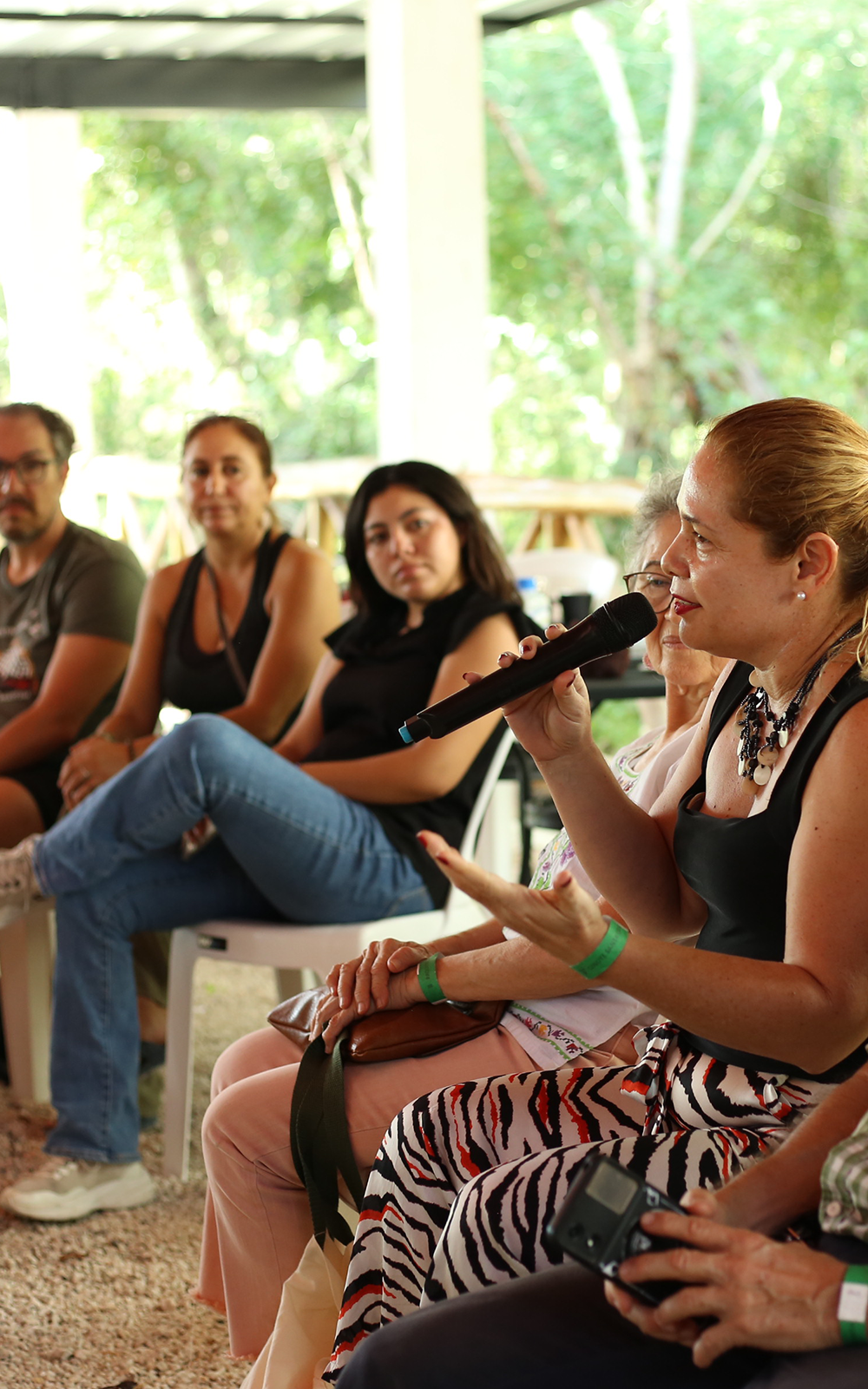
The knowledge generated by Wealth & Space will give rise to the Latin American Observatory of Geographies of Wealth, an interactive public education and communication tool to denaturalize and repoliticize the systems of wealth extraction and concentration in the region. This Observatory is our final work package and relies on methods of corporate analysis, a transdisciplinary approach and the political commitment towards communities and local stakeholders.
The project explores three case studies in Brazil, Chile and Mexico.
The Agribusiness-Urbanization Nexus - Matopiba in Brazil
Matopiba is experiencing a sharp increase in agro-industrial activities, and is becoming the main component of wealth production in the region. In this case, the research project studies how food production chains are structured between meat processing companies, soybean supply and landowners, as well as their main spatial strategies at local, regional and international scales.
The mining-urbanization nexus - Antofagasta and Santiago de Chile in Chile
While some of Chile's main copper mines are located in the mountains of the Antofagasta region, produced wealth circulates and is deployed in the city of Antofagasta and, especially, in the country's capital, Santiago de Chile. In this case, the research project studies the complex production chain linked to mining, which is related to the construction of ports, desalination plants, transportation, and urban and regional planning, which on a national scale is connected to the financial, real estate and telecommunications sectors.
The nexus between tourism and urbanization - Mexico's Yucatan Peninsula
The Yucatan Peninsula has become a paradigm of its insertion into world markets through multiple investments by local, national and international investors, especially in the tourism sector. In this case, the research project studies how tourism financing and investments are linked to the creation of new urban spaces that require different service and transportation infrastructures.